Betfred Founder Fred Done Predicts Possible End of UK High Street Betting Shops by 2030
Alex Krüger · Sep 20, 2026

Betfred Founder Fred Done Predicts Possible End of UK High Street Betting Shops by 2030
The Core Warning from Betfred's Founder
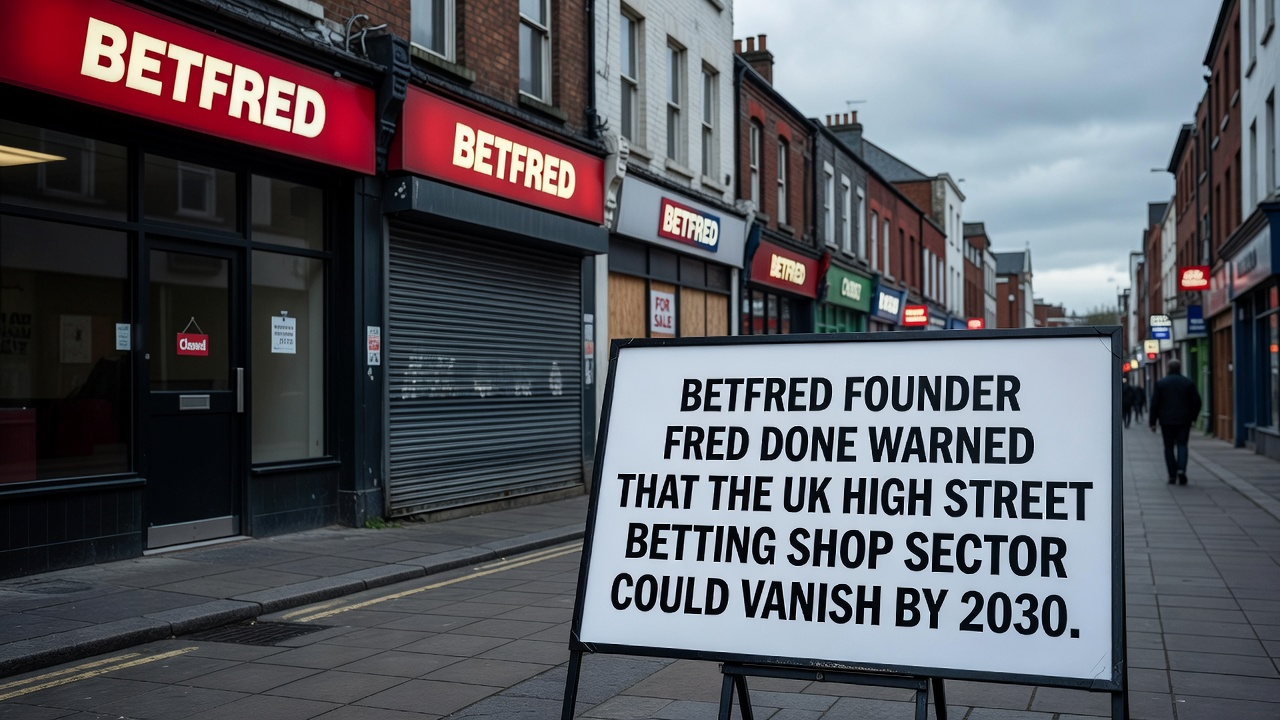
Fred Done, founder of Betfred, issued a direct assessment that the UK high street betting shop sector could disappear entirely by 2030 if current trends in taxation, wages, and operating costs continue without relief, noting that continued operation "won't be worth" sustaining under those conditions.
His comments arrived amid reports that Chancellor John Healey is examining a proposal to double the machine games duty rate from 20% to 40%, a change industry analysts project would trigger hundreds of shop closures and potentially exceed 1,000 locations while eliminating thousands of jobs across the sector.
Context of Rising Pressures on Retail Betting
Betting operators have faced steady increases in costs tied to wages, property expenses, and regulatory levies over recent years, and Done's statement frames the proposed duty hike as the tipping point that would render many physical locations unviable, since those shops rely heavily on gaming machine revenue to offset losses in traditional over-the-counter betting.
Industry figures indicate that shops already operate on thin margins in numerous locations, and a doubled duty would cut directly into the remaining profitability while accelerating decisions to close sites that fail to cover their overheads.
Parallel Statements from Other Major Operators
Done's remarks followed similar cautions delivered days earlier by Stella David, CEO of Entain, the parent company of Ladbrokes and Coral, who presented modelling data to Prime Minister Andy Burnham outlining severe economic consequences for both employment and local economies if the duty adjustment proceeds unchanged.
Those projections aligned with Done's assessment by highlighting the same combination of tax increases and fixed costs that threaten the sustainability of the entire high street presence.
Scale of Potential Closures adn Employment Impact
Modelling referenced in the recent statements estimates that the duty increase alone could force the permanent shutdown of hundreds of sites, with upper-range forecasts exceeding 1,000 closures nationwide, and each closure would remove multiple full-time and part-time positions from local labour markets already adjusting to broader retail sector shifts.
Operators note that many shops function as community hubs in addition to their commercial role, yet the arithmetic of doubled taxation leaves little room for maintaining marginal locations once revenue from machines drops below the combined burden of wages, rent, and compliance requirements.
Current Industry Data and Revenue Sources
According to industry statistics for the financial year April 2025 to March 2026, gaming machines continue to represent a substantial share of retail betting turnover, which explains why operators treat any duty adjustment as an existential variable rather than a marginal cost increase.
The data further shows that physical betting outlets have already reduced in number over the preceding periods, and the proposed policy change would compress the remaining network at an accelerated pace.
Timeline and Policy Considerations
The statements from Done and David coincide with ongoing fiscal planning discussions, and both executives emphasised that decisions made in the current cycle would determine whether high street betting survives into the next decade or contracts sharply before 2030 arrives.
While the Chancellor has not confirmed the final rate, the modelling presented to government officials underscores the narrow window operators have to adjust business models before cumulative cost pressures become irreversible.
Conclusion
The warnings issued by Fred Done and Stella David outline a clear trajectory: continued escalation in taxes and operating expenses threatens to eliminate the physical betting shop network within the next five years, with the proposed machine games duty adjustment acting as the decisive factor in hundreds or thousands of closures and associated job reductions across the UK.